
Smart Temperature Monitoring & Alert System for Real-Time Risk Prevention
Table of Contents
- Introduction
- Why Temperature Control is Critical in Cold Storage?
- Key Components of a Temperature Monitoring System
- Real-Time Alerts and Escalation Mechanisms
- Benefits of IoT-Enabled Cold Storage Monitoring
- Compliance and Regulatory Assurance
- Risk Mitigation Through Predictive Insights
- Choosing the Right Temperature Monitoring Solution
Introduction
Cold storage facilities operate within strict temperature thresholds to preserve perishable goods, pharmaceuticals, and processed foods. Even minor deviations can lead to spoilage, regulatory penalties, and financial losses. A robust temperature monitoring and alert system ensures consistent environmental control while minimizing operational risk.
Why Temperature Control is Critical in Cold Storage?
Cold storage environments demand precise thermal stability to maintain product integrity and shelf life. Uncontrolled fluctuations can compromise safety standards and damage brand reputation.
- Prevents product spoilage and microbial growth
- Ensures compliance with food and pharma regulations
- Reduces financial losses due to rejected inventory
- Maintains consistent product quality
- Protects long-term storage reliability
Key Components of a Temperature Monitoring System
A modern temperature monitoring solution combines intelligent hardware and cloud-based analytics to deliver real-time visibility and control.
Sensor Network and Data Acquisition
- High-accuracy digital temperature sensors
- Wireless or wired connectivity modules
- Gateway devices for centralized data transmission
- Continuous data logging with time stamps
Real-Time Alerts and Escalation Mechanisms
Instant alerts are critical when temperature thresholds are breached. A proactive notification framework prevents minor issues from escalating into major operational failures.
Multi-Channel Notification System
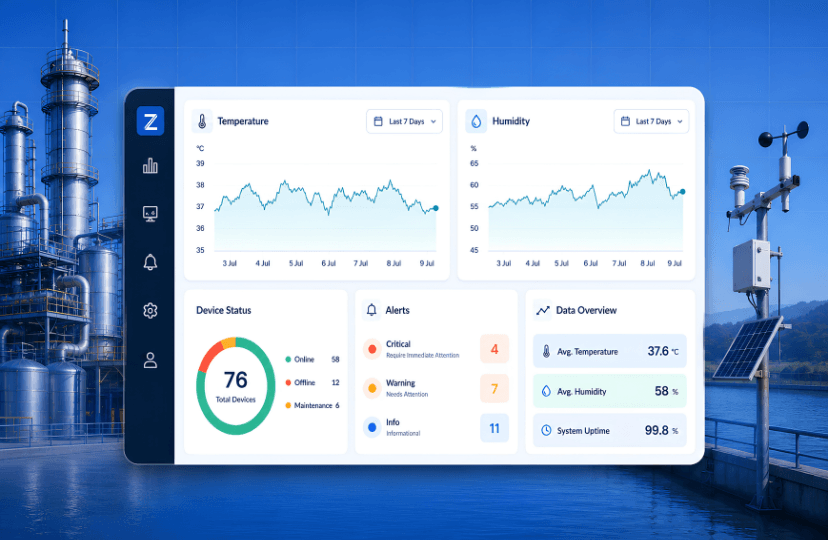
Alerts can be configured to trigger via SMS, email, mobile applications, or control room dashboards, ensuring responsible personnel respond immediately.
Benefits of IoT-Enabled Cold Storage Monitoring
IoT integration transforms traditional cold rooms into intelligent, data-driven environments. It allows stakeholders to remotely access temperature trends, receive automated reports, and implement predictive maintenance strategies.
- 24/7 remote monitoring from any location
- Automated compliance reporting and audit readiness
- Reduced manual inspection dependency
- Early detection of equipment malfunction
- Improved energy optimization and efficiency
Compliance and Regulatory Assurance
Industry Standards and Documentation
Cold storage operators must adhere to strict guidelines such as HACCP, GDP, and FSSAI standards depending on the industry.
Automated Reporting Advantages
- Real-time temperature logs for audits
- Historical data retrieval for traceability
- Digital records to eliminate manual errors
- Secure cloud storage for long-term retention
Risk Mitigation Through Predictive Insights
Advanced analytics help identify recurring fluctuations, compressor inefficiencies, or door-open anomalies before they lead to system breakdowns.
###Data-Driven Decision Making By analyzing historical temperature patterns, facility managers can schedule preventive maintenance, optimize loading cycles, and reduce unexpected downtime.
Choosing the Right Temperature Monitoring Solution
Selecting the appropriate system requires evaluating accuracy, scalability, integration capability, and long-term reliability.
- Sensor accuracy and calibration standards
- Cloud dashboard accessibility
- Customizable alert thresholds
- Battery backup and fail-safe mechanisms
- Technical support and service assurance
A well-implemented temperature monitoring and alert system safeguards inventory, ensures compliance, and strengthens operational resilience in modern cold storage facilities.
Table of Contents
- Introduction
- Why Temperature Control is Critical in Cold Storage?
- Key Components of a Temperature Monitoring System
- Real-Time Alerts and Escalation Mechanisms
- Benefits of IoT-Enabled Cold Storage Monitoring
- Compliance and Regulatory Assurance
- Risk Mitigation Through Predictive Insights
- Choosing the Right Temperature Monitoring Solution
Keep Exploring Our Blog Collection


© 2025, Enthu Technology Solutions India Pvt. Ltd. All Rights Reserved.