Industry 4.0 Explained: Technologies, Benefits and Applications

Table of Contents
- Industry 4.0 Explained: Technologies, Benefits and Applications
- The Evolution of Manufacturing Towards Industry 4.0
- Key Technologies Driving Industry 4.0
- How Industrial IoT Enables Smart Manufacturing
- Benefits of Industry 4.0 for Manufacturing Industries
- Real-World Applications of Industry 4.0
- Challenges in Implementing Industry 4.0
- The Future of Industry 4.0 and Smart Manufacturing
Industry 4.0 Explained: Technologies, Benefits and Applications
Industry 4.0 represents a major shift in how modern industries operate, combining digital technologies with traditional manufacturing processes. It connects industrial equipment, machines, sensors, and software systems to create intelligent and data-driven production environments. Unlike conventional manufacturing, Industry 4.0 focuses on continuous connectivity, real-time information, and automated decision support. Industrial Internet of Things (IIoT) technologies play an important role by collecting operational data from connected equipment. This information helps manufacturers understand machine performance, equipment conditions, production efficiency, and energy consumption. Smart manufacturing systems use these insights to identify inefficiencies and improve operational planning across industrial facilities. Technologies such as artificial intelligence, cloud computing, and industrial automation further enhance these capabilities. By integrating connected systems into existing operations, manufacturers can gradually move toward more efficient production processes. Understanding Industry 4.0 is essential for industries planning to improve productivity, reliability, and long-term competitiveness.
The Evolution of Manufacturing Towards Industry 4.0
Manufacturing has evolved through several technological revolutions, each introducing new methods to improve industrial productivity. Early manufacturing depended on mechanical equipment, followed by electricity-powered production and computer-controlled automation. Industry 4.0 extends these developments by connecting machines, industrial networks, and enterprise applications through digital technologies. Instead of operating as isolated systems, industrial equipment can exchange information and support coordinated operational activities. This transition enables manufacturers to monitor operations continuously and make informed decisions using available production data. The four industrial revolutions can be understood through their defining technologies and manufacturing capabilities:
- Industry 1.0 introduced mechanized production using water and steam power.
- Industry 2.0 enabled mass production through electricity and assembly lines.
- Industry 3.0 introduced computers, electronics, and programmable industrial automation.
- Industry 4.0 integrates connected machines, digital systems, and intelligent data processing.
- Modern smart factories combine these technologies to support flexible and efficient industrial operations.
Key Technologies Driving Industry 4.0
Industry 4.0 depends on several interconnected technologies that enable machines and software systems to communicate effectively. Industrial IoT devices collect operational information, while computing platforms transform raw measurements into useful insights. Automation systems support equipment control, and advanced analytics help organizations understand complex production conditions. Together, these technologies establish the foundation for connected factories and intelligent industrial operations.
Core Industry 4.0 Technologies
- Industrial IoT connects machines, sensors, and equipment for continuous operational data collection.
- Artificial intelligence identifies patterns, anomalies, and opportunities for process improvement.
- Cloud computing enables centralized data storage, processing, and remote accessibility.
- Edge computing processes selected industrial data closer to machines for faster local responses.
- Digital twins create virtual representations of physical equipment, processes, or production systems.
How Industrial IoT Enables Smart Manufacturing
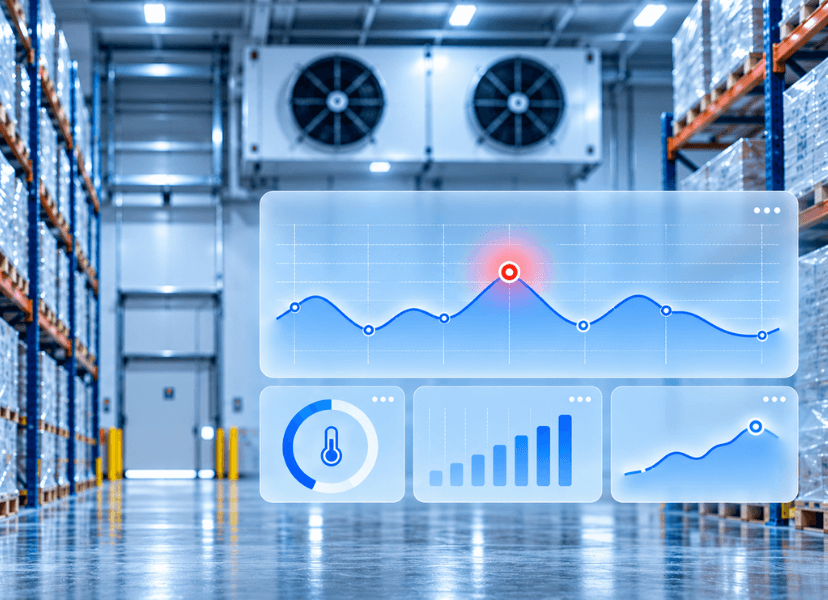
Industrial IoT forms an important part of Industry 4.0 by establishing communication between physical assets and digital applications. Sensors installed on industrial equipment can measure temperature, vibration, pressure, energy consumption, and other operating parameters. Communication technologies transfer this information through industrial gateways, networks, and compatible software platforms. Centralized monitoring applications organize equipment data into dashboards, historical trends, and operational reports. This creates greater visibility into manufacturing conditions without depending entirely on periodic manual inspections.
From Industrial Data to Operational Intelligence
When industrial data becomes available in real time, maintenance and production teams can respond more effectively. Monitoring applications can identify deviations from defined operating limits and generate alerts for abnormal conditions. Historical information also helps engineers understand equipment behavior and investigate recurring operational issues. Integrating IoT monitoring with existing PLC and SCADA environments can improve visibility across industrial operations.
Benefits of Industry 4.0 for Manufacturing Industries
Implementing Industry 4.0 technologies can improve operational efficiency by making industrial processes more visible and measurable. Connected equipment provides useful information that helps organizations identify performance gaps and maintenance requirements. Data-driven monitoring also supports better resource management, equipment utilization, and operational decision-making. However, actual improvements depend on implementation quality, system integration, and how effectively collected information is used.
Major Benefits of Industry 4.0
- Improved productivity through better visibility into machine operation and production performance.
- Reduced unplanned downtime through condition monitoring and early fault identification.
- Greater energy efficiency by identifying abnormal consumption and unnecessary equipment operation.
- Better equipment maintenance through historical data analysis and condition-based planning.
- Improved process consistency through continuous monitoring of critical production parameters. These capabilities help manufacturers move from reactive operations toward more structured and proactive industrial management.
Real-World Applications of Industry 4.0
- Machine condition monitoring tracks vibration, temperature, and operating parameters of industrial equipment.
- Predictive maintenance analyzes equipment data to identify potential failures before unexpected breakdowns.
- Industrial energy monitoring measures electricity consumption, demand, and power quality across facilities.
- Production monitoring provides visibility into equipment status, utilization, and manufacturing performance.
- Asset tracking supports the identification and movement monitoring of industrial resources.
- Environmental monitoring measures temperature, humidity, air quality, and other critical facility conditions.
- Remote monitoring enables authorized teams to access operational information from connected industrial locations.
- Quality monitoring helps identify process deviations that may affect production consistency.
- Water and utility monitoring supports efficient management of industrial water distribution and consumption.
Challenges in Implementing Industry 4.0
Common Industrial Implementation Challenges
- Legacy machinery may lack suitable interfaces for direct digital connectivity.
- Different industrial protocols can complicate communication between equipment and platforms.
- Initial investment requirements may limit the scope of early deployment.
- Inconsistent data quality can reduce the effectiveness of analytics and automated reporting.
- Cybersecurity risks increase when industrial systems become more interconnected.
- Technical skill gaps can affect deployment, maintenance, and system adoption.
- Integration with existing PLC, SCADA, and enterprise applications may require additional engineering.
- Expanding from pilot installations to plant-wide deployments requires careful planning.
The Future of Industry 4.0 and Smart Manufacturing
Moving Towards Connected Industrial Operations
The future of Industry 4.0 will increasingly depend on interoperable systems, intelligent analytics, and secure industrial connectivity. Manufacturers can combine real-time monitoring with historical operational data to improve maintenance and production strategies. Advances in edge computing and artificial intelligence can support faster analysis and more responsive industrial applications. As digital technologies become more accessible, gradual modernization offers a practical approach for different manufacturing environments.
Building a Scalable Industry 4.0 Strategy
- Identify operational challenges that can be addressed through connected monitoring.
- Evaluate existing equipment, communication protocols, and available industrial data.
- Begin with focused applications such as machine monitoring or industrial energy management.
- Establish reliable connectivity, data collection, and cybersecurity practices.
- Expand successful deployments through scalable platforms and measurable operational improvements.
Table of Contents
- Industry 4.0 Explained: Technologies, Benefits and Applications
- The Evolution of Manufacturing Towards Industry 4.0
- Key Technologies Driving Industry 4.0
- How Industrial IoT Enables Smart Manufacturing
- Benefits of Industry 4.0 for Manufacturing Industries
- Real-World Applications of Industry 4.0
- Challenges in Implementing Industry 4.0
- The Future of Industry 4.0 and Smart Manufacturing
Keep Exploring Our Blog Collection

© 2026, Enthu Technology Solutions India Pvt. Ltd. All Rights Reserved.