The Hidden Cost of Door-Open Events in Cold Rooms

Table of Contents
- The Hidden Cost of Door-Open Events in Cold Rooms
- Why Door Openings Cause Temperature Rise
- The Energy Cost Behind Every Door-Open Event
- Product Quality Can Be Affected Too
- The Hidden Maintenance Impact
- What Makes Door-Open Events Difficult to Control
- How Continuous Monitoring Changes the Picture
- Turning Door-Open Data Into Operational Improvements
- Building a More Efficient Cold-Room Operation
The Hidden Cost of Door-Open Events in Cold Rooms
Cold rooms are designed to maintain a stable temperature for products that depend on controlled storage conditions. Every time the cold-room door is opened, warm outside air enters and cold air escapes. Even a short door-open event can create a noticeable temperature change inside the storage area. The refrigeration system then has to work harder to bring the room back to its required temperature. Frequent door openings can therefore increase energy consumption and place additional load on refrigeration equipment. The impact becomes more significant in busy warehouses where loading, unloading, picking, and movement happen throughout the day. The real cost is not only the electricity used to recover the temperature. It can also include product quality risks, equipment stress, and operational inefficiencies. Understanding these hidden costs helps cold-chain operators take better control of their storage environment.
Why Door Openings Cause Temperature Rise
When a cold-room door opens, the temperature difference between the inside and outside creates rapid air exchange. Warm air moves into the cold room while colder air moves toward the warmer area outside. The longer the door remains open, the greater the amount of warm air entering the room. This effect can become stronger when the outside environment is hot or humid. Humidity entering the room can also increase condensation and frost formation on cooling equipment. The refrigeration system must remove the additional heat and moisture before the room returns to its target condition. Repeated recovery cycles can make the refrigeration system operate for longer periods. This means a simple operational activity such as opening a door can create a chain of hidden energy and maintenance costs. The effect may not be obvious when looking at a single door opening, but it becomes significant when repeated throughout the day.
The Energy Cost Behind Every Door-Open Event
A cold room does not immediately return to its required temperature after the door is closed. The refrigeration system needs additional operating time to remove the heat introduced during the opening. When this happens repeatedly, compressors, fans, and other refrigeration components may operate more frequently. The additional operating time directly affects the energy consumed by the refrigeration system. In a facility with multiple cold rooms, these small increases can become a meaningful operating expense. Monitoring door activity can help identify rooms or time periods where unnecessary temperature recovery is happening.
Where Energy Loss Can Build Up
- Frequent loading and unloading
- Doors being left open during product movement
- Long picking and handling operations
- Poorly planned movement of products
- High-traffic cold-room entrances
- Delayed closing of insulated doors
Product Quality Can Be Affected Too
Temperature fluctuations are not only an energy problem; they can also create risks for temperature-sensitive products. Products may experience conditions outside their recommended storage range when temperature recovery takes too long. Repeated fluctuations can be particularly concerning for food, pharmaceutical, dairy, and other temperature-sensitive products. The actual impact depends on the product, storage requirement, exposure duration, and frequency of temperature changes. A cold room may appear to be operating normally while short temperature excursions occur during daily operations. Without continuous monitoring, these events can easily remain unnoticed. This makes it difficult for warehouse teams to understand whether door activity is contributing to temperature instability. Tracking temperature changes alongside operational events provides a clearer picture of what is happening inside the cold room.
Why Short Events Still Matter
A single short opening may have a limited effect. However, dozens or hundreds of openings can create repeated temperature disturbances. Over time, these repeated disturbances can become an operational risk.
The Hidden Maintenance Impact
Frequent temperature recovery does more than increase energy consumption. It can increase the operating workload placed on refrigeration equipment. Compressors and cooling systems may need to run for longer periods to compensate for heat entering through open doors. Higher operating frequency can contribute to additional wear over time. Frost and condensation can also create additional maintenance requirements depending on the room conditions. These effects may not appear as a separate line item in the facility's monthly expenses. Instead, they can appear gradually through higher electricity bills, maintenance activity, and equipment downtime. This is why door-open events should be considered as part of overall cold-room efficiency. Reducing unnecessary openings can support both operational efficiency and equipment performance.
What Makes Door-Open Events Difficult to Control
- Cold-room doors are frequently opened during receiving and dispatch operations.
- Workers may need to keep doors open while moving multiple products.
- High warehouse traffic can make repeated openings unavoidable.
- Manual observation cannot accurately record every opening and closing event.
- Temperature changes may happen between routine inspection periods.
- Teams may not know which activities are causing the largest temperature fluctuations.
- Without historical data, it is difficult to compare door activity with temperature recovery.
How Continuous Monitoring Changes the Picture
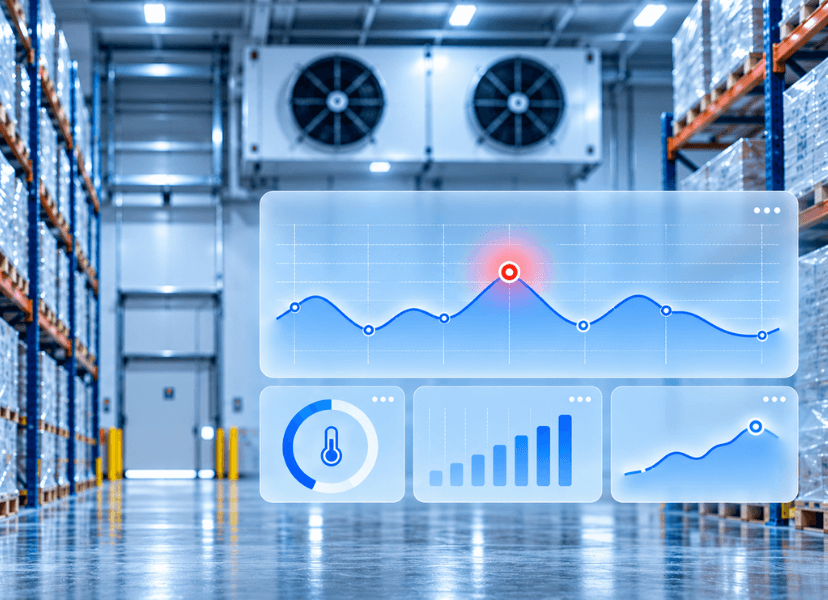
Continuous monitoring gives cold-chain teams visibility into what is happening inside a cold room throughout the day. Instead of depending only on manual temperature checks, teams can observe temperature conditions continuously. Temperature data can show when the room starts warming and how long it takes to recover. Historical information can then help identify repeated patterns during specific shifts or operating periods.
From Guesswork to Data
A monitoring system can help teams understand whether temperature changes happen during loading, unloading, picking, or other activities. This information allows warehouse managers to investigate operational causes instead of simply reacting to temperature alarms. It also creates a historical record that can support audits, reporting, and process improvement.
What Teams Can Monitor
- Temperature trends
- Temperature excursions
- Recovery time after temperature changes
- Repeated periods of instability
- Conditions across different storage zones
Turning Door-Open Data Into Operational Improvements
The goal of monitoring is not simply to collect temperature readings. The real value comes from using the information to improve daily cold-room operations. Teams can identify high-risk periods and review how products are moved during those periods. Warehouse processes can then be adjusted to reduce unnecessary door openings and shorten handling time. Frequently accessed products can be positioned closer to suitable access points where practical. Staff can also be trained to close doors immediately after completing movement activities. Over time, historical monitoring data can help measure whether these changes are actually improving temperature stability. This creates a continuous improvement cycle based on real operating conditions rather than assumptions.
Building a More Efficient Cold-Room Operation
Door-open events may look like small operational activities, but their combined impact can be much larger than expected. They can contribute to temperature fluctuations, additional refrigeration runtime, higher energy consumption, and increased equipment workload. They can also create risks for products when temperature-sensitive goods are exposed to repeated excursions. Continuous monitoring helps businesses see these events and understand their operational impact. With better visibility, warehouse teams can identify patterns, improve handling processes, and respond faster to abnormal conditions. The objective is not to eliminate every door opening because product movement is essential to warehouse operations. Instead, the goal is to make every door opening more controlled, measurable, and efficient. By turning cold-room conditions into actionable data, businesses can reduce hidden losses while maintaining better control over their cold-chain environment.
Table of Contents
- The Hidden Cost of Door-Open Events in Cold Rooms
- Why Door Openings Cause Temperature Rise
- The Energy Cost Behind Every Door-Open Event
- Product Quality Can Be Affected Too
- The Hidden Maintenance Impact
- What Makes Door-Open Events Difficult to Control
- How Continuous Monitoring Changes the Picture
- Turning Door-Open Data Into Operational Improvements
- Building a More Efficient Cold-Room Operation
Keep Exploring Our Blog Collection

© 2026, Enthu Technology Solutions India Pvt. Ltd. All Rights Reserved.